

The Value of Classic Italian Interiors in a Private Residence
11/18/2026
A dining room has a life even when the table is bare. Daylight travels across the polished top, catching first the fine border and then the pale scrollwork at its centre. The buttoned backs of the chairs rise just above it. Beyond them, a mirror holds a glimpse of curtains from the opposite side of the room. Long before anyone sits down to dinner, the house has already offered its guests a certain welcome.
This is one of the qualities that gives classic Italian interiors their enduring appeal. Their richness unfolds at different distances and at different moments of the day. A chandelier seen from the hall becomes a hundred small reflections seen from a chair. A cabinet first noticed for its silhouette reveals a pair of urns within its door panels. The value of luxury Italian furniture in a private residence lies partly in this intimacy. Pieces chosen for occasions of ceremony also have something to offer on an ordinary morning.
When furniture becomes part of the architecture
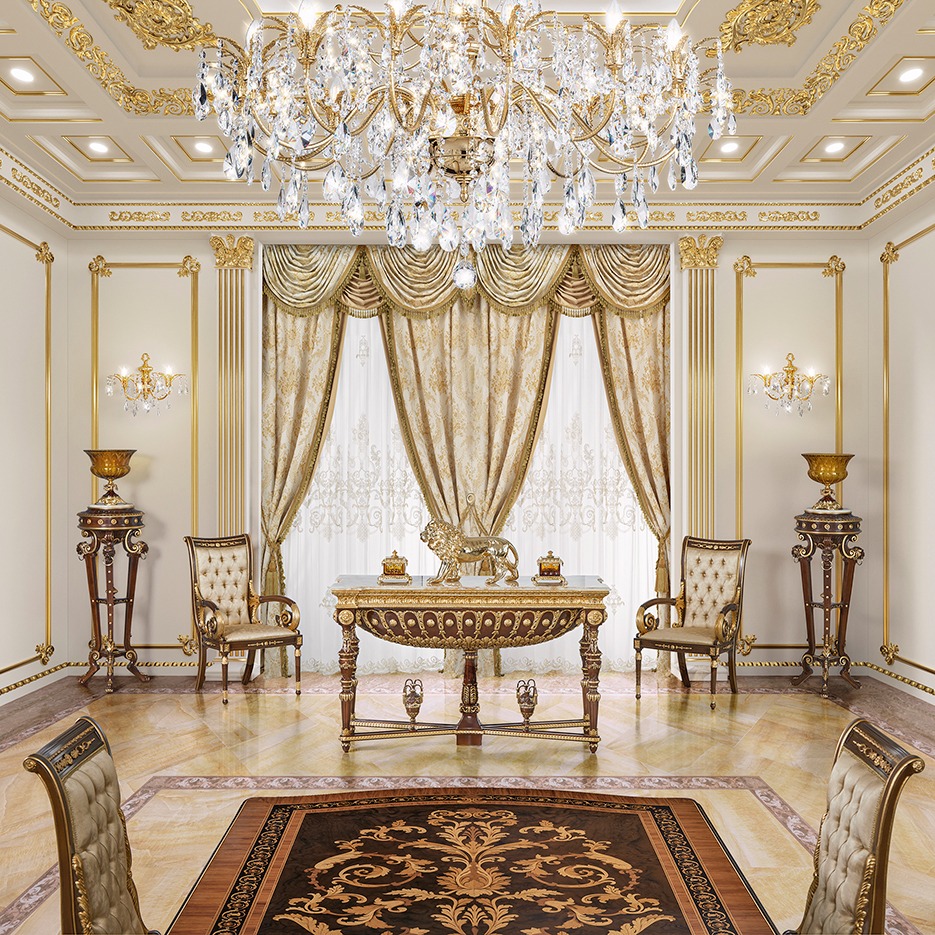
In a classical interior, the architecture and the furniture often share a vocabulary. In this Modenese dining room, narrow gold-toned mouldings trace rectangles across ivory walls. A finer border follows the perimeter of the dark tabletop. The wall panels rise between fluted pilasters, while the table rests on two substantial pedestals with fluted stems. The resemblance is subtle enough to register before one can quite say what connects the two.
There is particular pleasure in seeing the same idea interpreted at such different scales. High above the table, garlands stretch in long arcs across the wall. Closer to the hand, a continuous band of small circular motifs runs beneath the edge of the tabletop. Between the two lies a generous expanse of pale wall. It gives each ornament a distinct outline and lends the room a composure that carries through to the furniture.
This relationship gives a private residence an identity of its own. Even in a photograph showing only the corner of a chair and the edge of the table, the sweep of a dark arm, its gold-toned scroll and the ivory upholstery recall the character of the larger room.
The dining table and the life of the house
Of all the pieces in a formal dining room, the table has the closest relationship with family ritual. The same surface can hold two breakfast settings at one end, a handwritten place card at every seat for an anniversary, or the last coffee cups after a dinner that nobody is quite ready to leave. Its scale lends an occasion a sense of importance. Familiarity gives it affection.
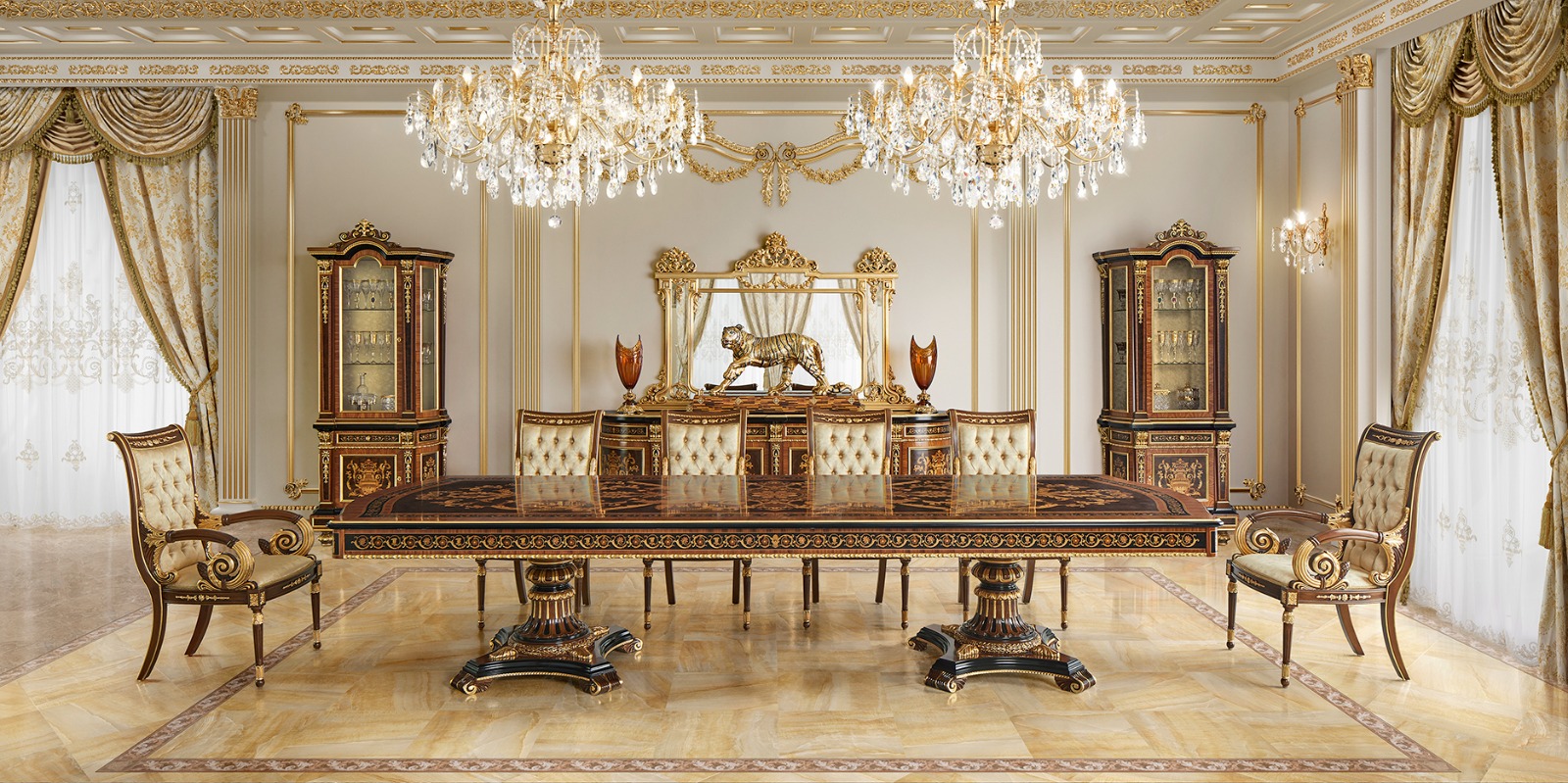
Here, a dark rectangular top stretches beneath a pair of chandeliers. Its two pedestals give the table a sculptural presence, especially in the low band of space beneath the chairs. Above, the polished surface catches a pale reflection of each upholstered back. Modenese’s classic Italian dining tables belong to this tradition of furniture conceived equally for the distant view and for the people gathered around it.
The chairs bring the formality down to a human scale. At the head of the table, the arms curl into broad volutes. Their upper edges offer a smooth place for a hand to rest, while the buttoning breaks the pale back into small pockets of light and shade. It is an intimate detail in a room of considerable splendour. The appeal of upholstered dining armchairs is perhaps most apparent late in the evening, when guests turn slightly away from the table to continue a conversation.
A place for the things a family keeps
A house acquires character through what its owners choose to keep in view. In the tall glazed cabinets flanking the dining room mirror, individual glasses can be distinguished against the darker frames. An empty glass has very little visual weight. Several together catch enough light to draw the eye across the room. The cabinets give these small, personal objects an architectural presence of their own.
For families with inherited stemware or a service assembled over many years, glass-fronted display cabinets make those pieces part of daily life. A glass brought out for a celebration remains familiar throughout the year. Sometimes its interest lies in the slight difference between it and the next one on the shelf, a reminder that the collection grew over time.
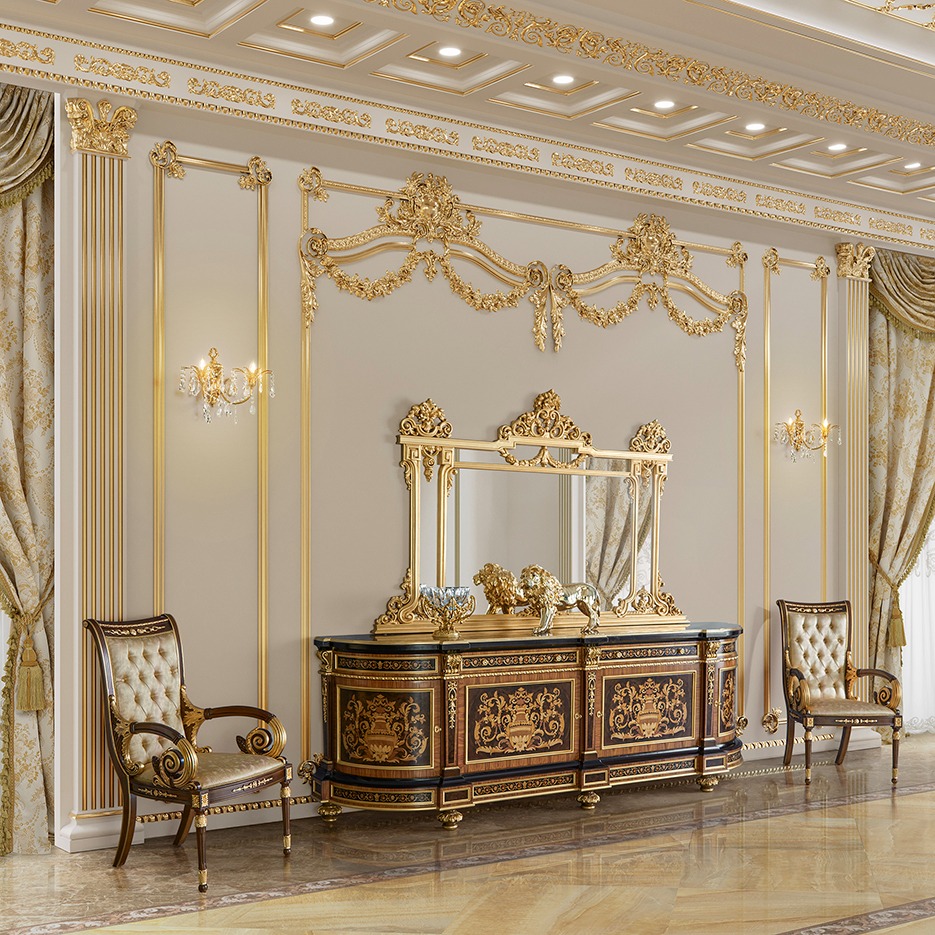
The sideboard offers a different kind of pleasure. In the closer view, its curved ends carry the floral ornament around the corners, and small feet lift the dark cabinet just clear of the reflective floor. Above it, a lion stands in front of the mirror. Its mane appears twice, once in sharp profile and again in reflection. Among Modenese’s Italian sideboards and credenzas, it is this broad horizontal silhouette that gives a favourite object room to be seen.
A room remembered in the evening light
As daylight fades, the brightest parts of a classical dining room change. By day, the windows draw attention to the fall of the curtains and the fine pattern of the sheers. In the evening, the chandeliers bring the focus back over the table. Their pendants break the light into small points above the guests, while the dark surface below gathers the reflections into a softer glow. The furniture is the same, yet the atmosphere belongs to dinner.
Much of the lasting value of a classic interior resides in these associations. A guest may remember the gold scroll at the end of an armrest because that was where she sat at a family wedding dinner. A child may recognise a grandparent’s house years later from the little lion that stood before the mirror. With time, the formal dining room becomes unmistakably the family’s own.
For a private residence, that is a distinctly personal expression of luxury. The architecture gives a room its proportions, the furniture gives an occasion its setting, and the people who return to it supply its history. To explore that relationship for your own residence, begin a conversation with Modenese.
Related reading: How to Style a Sideboard with a Mirror in a Classic Living Room and Classic Italian Furniture and the Ritual of the Aperitivo.
Related News
-

10 Tips for Choosing the Perfect Italian Dining Room
A dining room has a life even when the table is bare. Daylight travels across the polished top, catc...
Read More -

15 Ideas Palace Design Ideas To Bring Regal Elegance To Your Home
A dining room has a life even when the table is bare. Daylight travels across the polished top, catc...
Read More -

Modern Villa Design Ideas for Exteriors, Interiors and Pools
A dining room has a life even when the table is bare. Daylight travels across the polished top, catc...
Read More -

7 Essential Elements to Consider When Designing a Villa
A dining room has a life even when the table is bare. Daylight travels across the polished top, catc...
Read More -

What the Inside of a Castle Looks Like, From Great Hall to Dungeon
A dining room has a life even when the table is bare. Daylight travels across the polished top, catc...
Read More -

The Art of the Luxury Classic Armchair: How to Transform Your Living Area into a Timeless Palace
A dining room has a life even when the table is bare. Daylight travels across the polished top, catc...
Read More


Contact Us
Kindly provide your contact information below, and our dedicated sales team will promptly connect with you to address any inquiries.